

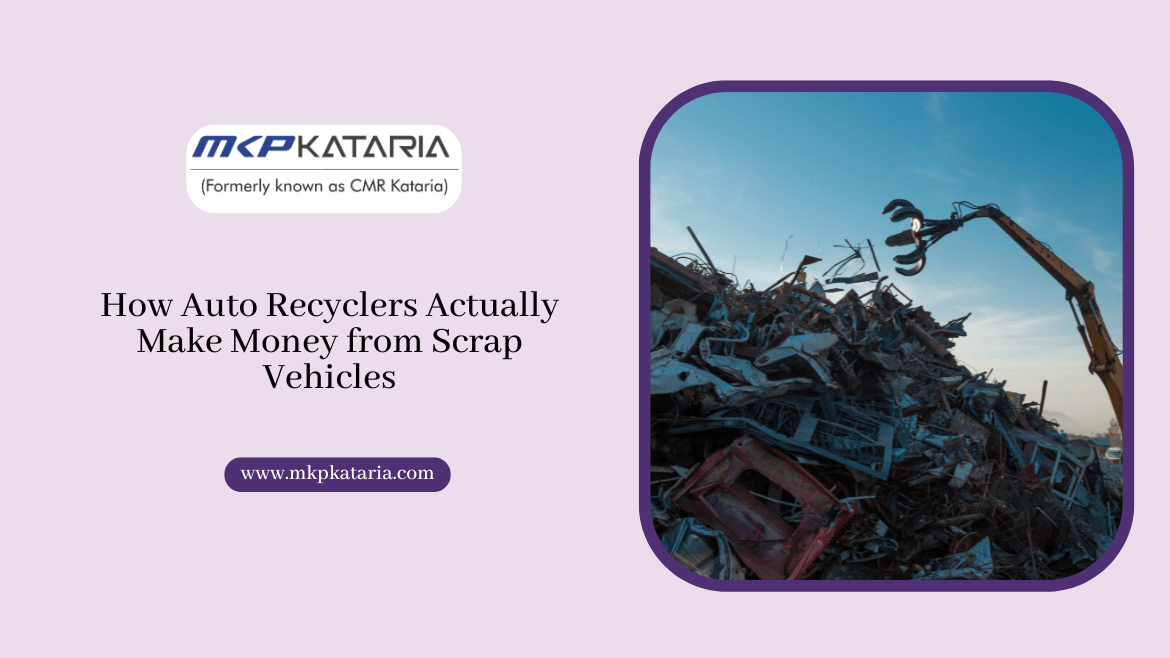
Most people look at a wrecked or old car and see junk. Auto recyclers look at the same vehicle and see a dozen different income opportunities. That’s the fundamental difference between how the general public and the recycling industry view end-of-life vehicles.
If you’re exploring what happens at a car scrap yard in Ahmedabad or simply curious about how the scrapping business actually works.
Here’s a simple breakdown of every revenue stream involved.
How Auto Recyclers Generate Revenue from Scrap Vehicles
Before any dismantling begins, a trained technician walks around the vehicle and assesses what’s salvageable. No part gets scrapped without being evaluated for its use and how it should be put to use in order to maximize profits.
1. Selling Reusable Auto Parts
This is the most profitable activity in the entire recycling process. Individual components pulled from one car can collectively fetch far more than the vehicle was purchased for.
- Engines still holding compression
- Gearboxes in working condition
- Alternators and starter motors
- AC compressors and headlights
- Doors, mirrors, and body panels
- Alloy wheels and seat assemblies
For mechanics and car owners, buying a good used part from a scrap yard is often half the price of a new one. That demand keeps this market active and makes spare part sales the backbone of any auto recycling operation.
2. Recycling Scrap Metal
Once every salvageable part is removed, what’s left is still far from worthless. The remaining shell is a collection of metals that carry real market value and recyclers know exactly how to extract maximum return from each type.
- Steel from body panels and frame
- Aluminium from engine components
- Copper pulled from wiring harness
- Brass fittings throughout the vehicle
- Iron from heavier structural parts
These metals go to foundries and manufacturers who melt them down for new production, everything from car parts to construction materials. Recyclers watch scrap rates closely because metal prices move with the market, and timing matters.
3. Recovering Valuable Catalytic Converters
This small component surprises most people with its value. A catalytic converter looks unremarkable from the outside, but inside it contains precious metals that industrial buyers are always willing to pay for.
- Platinum content in the substrate
- Palladium recovered by specialist refiners
- Rhodium commanding high market rates
- Value varies by vehicle model
- Specialist buyers purchase in volume
Recyclers remove converters before anything else gets dismantled. The metals inside are recovered through a refining process and re-enter supply chains for industrial and automotive use.
4. Selling Rebuildable Components
Not every worn part ends up in a retail buyer’s hands. Some components are too tired for direct resale but have enough material integrity to be worth rebuilding. Remanufacturing companies specifically look for these.
- Alternators and steering racks
- Turbochargers and fuel injectors
- Starter motors and brake calipers
- Power steering pumps
- Air conditioning compressors
These “core” units are cleaned, rebuilt to spec, and resold as remanufactured parts, usually at a price point between new OEM and used salvage. It’s a well-established part of the aftermarket supply chain.
5. Recycling Batteries
The batteries of vehicles contain dangerous and very recyclable materials. These are taken care of by authorized recyclers, who extract real value from the process.
- Recovered lead plates remelted
- Plastic casing sent for reprocessing
- Acid neutralised before disposal
- Material feeds into new battery production
- Prevents environmental contamination
This is one of those activities where doing the right thing and earning from it happen to align perfectly.
6. Recovering Tyres and Wheels
A surprising number of scrap vehicles still have tyres with life left in them. Good-condition tyres get resold directly. Worn ones don’t go to waste either.
- Usable tyres resold at lower price points
- Worn tyres converted to rubber products
- Steel rims sold to metal buyers
- Alloy wheels command premium resale
- Crumb rubber used in road construction
Wheels, especially factory alloys, are always in demand in the used market — particularly for older or discontinued vehicle models where new replacements are hard to find.
7. Safe Disposal of Fluids
The process of fluid removal may not be very exciting, but it is necessary and part of it involves the removal of recoverable materials.
- Engine oil draining and filtration
- Coolant extraction for recycling purposes
- Brake fluid draining carefully
- Transmission fluid draining
- Fuel draining prior to crushing
Some of the fluids may be filtered and resold for industrial use, while others are disposed of according to the guidelines for environmental compliance.
8. Government Vehicle Scrappage Programs
The vehicle scrappage policy of India provided licensed recycling firms with one more benefit than unauthorized entities could provide.
- Official Certificate of Deposit issued
- Vehicle owner claims new car discounts
- Manufacturer incentives tied to certificate
- Processing fees earned per vehicle
- Increases footfall at registered yards
For vehicle owners in Ahmedabad, this is a meaningful benefit. The certificate has real monetary value when used against a new vehicle purchase, something only an authorized car scrap yard in Ahmedabad can issue.
9. Towing and Collection Services
Many customers can’t move their vehicles on their own, whether it’s an accident-damaged car, a non-starter, or an abandoned vehicle taking up space.
- Low cost of charged pick-up of low-cost vehicles
- Free pick-up provided for high-value cars
- Handling of accident recoveries done directly
- Makes it much easier for the client
- Helps build trust and referrals
The recycler finds it useful as both a service and a source of vehicles, making it possible to bring more vehicles to the yard without just waiting for drop-offs.
10. Supporting the Circular Economy
Apart from being sources of income, proper auto recycling becomes part of a bigger cycle in which materials continue to circulate without anything ever being wasted.
- Reduces need for raw material extraction
- Decreases energy consumption during production
- Ensures that functional parts are constantly available
- Increases overall carbon footprint savings
- Decreases automotive waste
With each vehicle that goes through an authorized facility, there’s one less car left in the field, slowly deteriorating away.
Why Choose an Authorized Car Scrap Yard?
There are unlicensed operators who will take your car off your hands, but the risks that come with that choice aren’t worth it.
- Legal RTO documentation handled
- Scrappage certificate properly issued
- Hazardous materials disposed correctly
- Transparent valuation process followed
- Full environmental compliance maintained
Choosing a licensed facility protects you legally, ensures you receive whatever government benefits apply to your vehicle, and confirms the car was handled responsibly after leaving your hands.
Conclusion
A scrap car is not simply metal and rubber left unused. Rather, it is a combination of different components, which have the potential to make a commercial enterprise through their recovery and resale. This helps the entire process become a profitable venture.
In case you are looking for an efficient scrap car buyer in Ahmedabad, then MKP Kataria will do it all at once, ranging from proper valuation of the car to its scrapping. Please contact us now and know how much we can pay for your scrap car.
FAQ
- What is the role of a car scrap yard in Ahmedabad?
A car scrapyard takes apart old cars, reuses the usable parts, and properly disposes of the rest.
- Do I get any money from scrapping my old car?
Yes, provided your vehicle is eligible and its weight and reusable parts.
- What is the reason auto recyclers salvage parts from cars before crushing them?
They take out the reusable parts to increase the value of the car.
- What materials are commonly recycled from scrap cars?
Common recycled materials include steel, aluminum, copper, rubber, plastics, glass and batteries.