

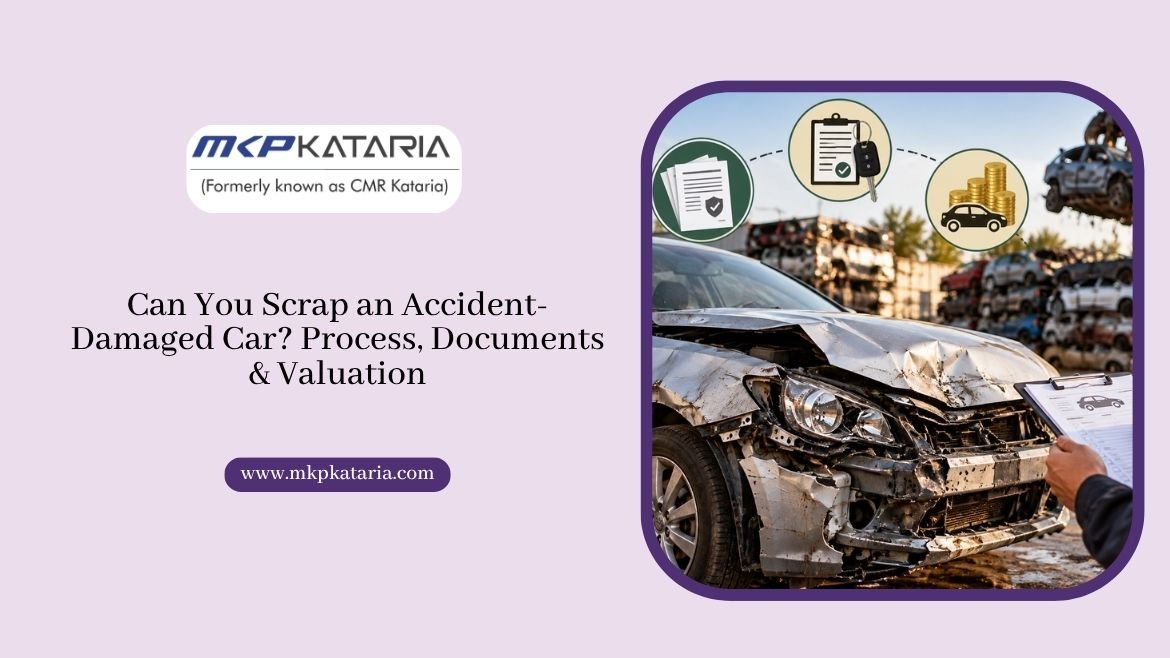
An accident can leave a car badly damaged, unsafe to drive, or too expensive to repair. In such situations, many vehicle owners consider scrapping the car instead of spending more money on repairs. But can an accident-damaged car actually be scrapped? Yes, in many cases, an accident-damaged or end-of-life vehicle can be sent for authorised scrapping, provided the required ownership and vehicle documents are available.
Scrapping an accident-damaged car can also help owners recover some value from a vehicle that is no longer practical to repair. This guide explains the process, required documents, valuation factors, and important points to check before scrapping your damaged car.
Can You Scrap an Accident-Damaged Car?
Yes. An accident-damaged car can generally be considered for scrapping if the vehicle is beyond economical repair or the owner chooses to dispose of it through a suitable vehicle scrapping facility.
The condition of the car does not necessarily have to be perfect. A damaged vehicle may still contain recyclable metals, reusable components, tyres, glass, electrical parts, and other materials.
However, the exact process depends on the vehicle’s ownership documents, registration status, insurance situation, and the requirements of the authorised scrapping facility.
When Should You Consider Scrapping an Accident-Damaged Car?
Repairing a damaged vehicle may not always make financial sense. Scrapping can be considered when:
- The repair cost is very high compared with the vehicle’s value.
- The car has major structural or chassis damage.
- The vehicle has suffered severe fire or flood damage.
- Important mechanical and electrical systems are badly damaged.
- The insurance company has declared the vehicle a total loss.
- The vehicle is old and already approaching the end of its useful life.
- The car is no longer safe or economical to operate.
- Finding replacement parts is difficult or expensive.
Before making a decision, compare the estimated repair cost with the vehicle’s current market value and potential scrap value.
What Is the Process of Scrapping an Accident-Damaged Car?
The process can vary depending on the vehicle and facility, but the general steps are straightforward.
1. Evaluate the Vehicle’s Condition
First, assess the extent of accident damage. This can include damage to the body, engine, transmission, chassis, electrical systems, airbags, suspension, and other major components.
If the repair estimate is significantly high, scrapping may be an option worth considering.
2. Check Your Vehicle Documents
Make sure you have the necessary ownership and registration documents. The scrapping facility may need to verify that you are the legal owner of the vehicle.
Important details may include:
- Registration Certificate (RC)
- Valid identity proof
- Address proof, where required
- Vehicle-related documents
- Insurance documents, if applicable
- Loan or finance-related documents, if applicable
The exact documents required can vary depending on the vehicle and the scrapping process.
3. Contact an Authorised Vehicle Scrapping Facility
Choose a registered or authorised vehicle scrapping facility instead of handing the vehicle over to an unknown buyer.
For owners looking for car scrap dealers in ahmedabad, it is important to verify the facility’s credentials, documentation process, valuation method, and vehicle pickup arrangements before handing over the car.
4. Vehicle Inspection and Valuation
The vehicle is inspected to determine its condition and approximate scrap value.
The valuation can consider factors such as:
- Vehicle weight
- Type and quantity of recyclable metal
- Vehicle make and model
- Condition of reusable components
- Damage level
- Current scrap material rates
- Tyres, batteries and other recoverable components
- Demand for specific parts
An accident-damaged car may have a lower value than a similar undamaged vehicle, but usable components can still contribute to its overall value.
5. Vehicle Pickup or Transportation
If the car cannot be driven because of accident damage, ask whether the facility provides pickup or transportation.
This can be particularly useful for vehicles with damaged wheels, engines, steering systems, chassis components, or severe body damage.
6. Scrapping and Documentation
Once the necessary verification and formalities are completed, the vehicle can be processed for scrapping according to the applicable procedure.
The owner should keep all relevant documents or certificates provided during the process as proof that the vehicle has been formally processed.
Documents Usually Required to Scrap an Accident-Damaged Car
The exact requirements can differ, but owners should generally keep the following ready:
|
Document |
Purpose |
|
Registration Certificate (RC) |
Confirms vehicle registration and ownership |
|
Identity Proof |
Verifies the owner’s identity |
|
Address Proof |
May be required for verification |
|
Insurance Documents |
Useful when the vehicle has an insurance claim |
|
Loan/Finance Documents |
Important if the vehicle is financed |
|
Vehicle Details |
Helps with inspection and verification |
If the vehicle has been declared a total loss by an insurance company, keep the relevant insurance and settlement documents available.
How Is an Accident-Damaged Car Valued for Scrap?
Scrap valuation is not based only on the vehicle’s original purchase price or current resale value.
The condition and recoverable materials play an important role. For example, a heavily damaged car may still contain recyclable steel, aluminium, copper and other materials.
Some components may also have reuse value if they are in suitable condition.
Factors that can affect valuation include:
Vehicle weight: Heavier vehicles generally contain more recyclable material.
Metal composition: The amount and type of recyclable metal can influence the scrap value.
Parts condition: Usable components may contribute additional value depending on the facility and applicable process.
Damage level: Severe damage can reduce the value of reusable components.
Current scrap rates: Scrap material prices can change over time.
Vehicle type: Different vehicle types contain different quantities and types of materials.
Because of these factors, two accident-damaged cars of the same model may receive different valuations.
What If the Car Is Financed?
If the damaged vehicle has an outstanding loan, do not assume that it can immediately be scrapped.
The owner should first check the finance company’s requirements and resolve any applicable hypothecation or loan-related formalities. The scrapping facility may also require additional documentation before processing the vehicle.
What If the RC or Other Documents Are Missing?
Missing documents can make the process more complicated. Do not simply hand the vehicle to an informal scrap buyer without confirming the legal process.
Contact the relevant transport authority or authorised scrapping facility to understand what documents or verification are required for your specific case.
Accident-Damaged Car: Repair or Scrap?
There is no single answer for every vehicle. Consider these factors before deciding:
- Total repair estimate
- Current market value
- Vehicle age
- Structural damage
- Insurance settlement
- Availability of replacement parts
- Expected future maintenance costs
- Potential scrap value
If repairing the vehicle requires a large investment and the resulting vehicle would still have limited value, scrapping may be worth considering.
Final Checklist Before Scrapping Your Accident-Damaged Car
Before handing over the vehicle, make sure you:
- Verify the scrapping facility.
- Confirm the required documents.
- Remove personal belongings from the car.
- Check the vehicle valuation.
- Understand the pickup and transportation process.
- Complete the required ownership and registration formalities.
- Keep copies of relevant documents and certificates.
- Confirm that the vehicle has been processed through the appropriate procedure.
Conclusion
An accident-damaged car does not necessarily have to remain unused in your driveway. If the vehicle is severely damaged or repairing it is no longer economical, authorised vehicle scrapping can be an option.
The key is to evaluate the repair cost, understand the vehicle’s potential scrap value, prepare the required documents, and choose a legitimate scrapping facility. A proper process can help ensure that the vehicle is handled responsibly while allowing the owner to recover value from an otherwise unusable car.