

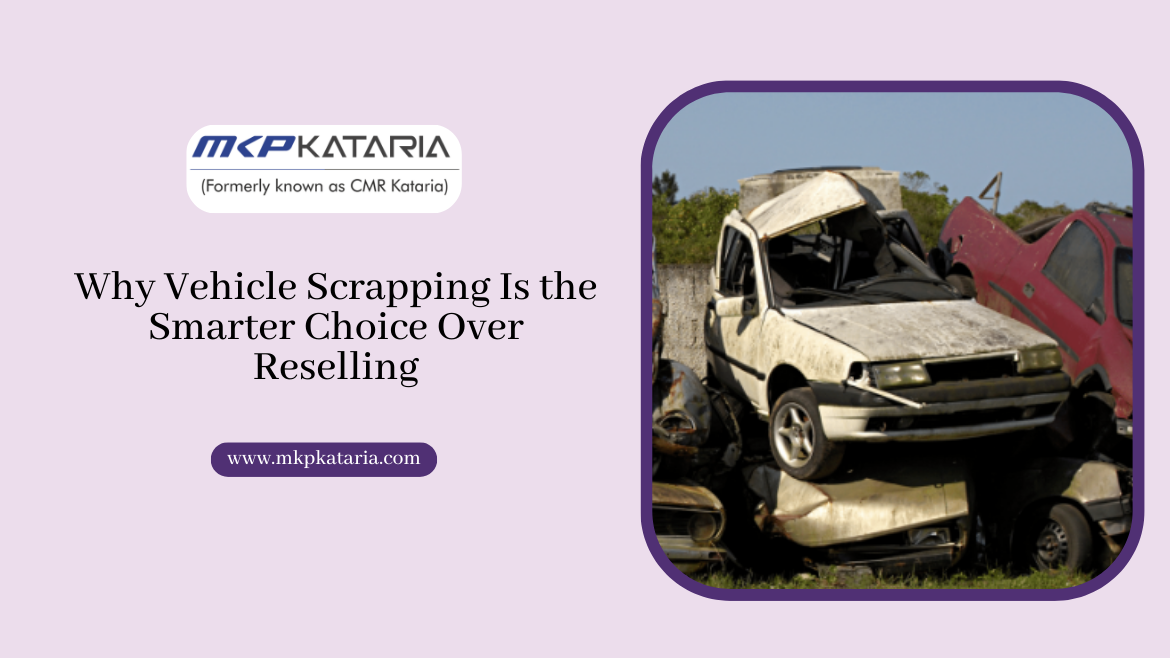
There comes a time in almost every vehicle owner’s life when the familiar sound of the engine no longer feels reassuring. Gradually, the vehicle that once felt reliable becomes something you keep an eye on instead of something you enjoy. That is usually when the question arises. Should you try to sell it, or should you consider letting it retire completely. More owners today are leaning toward the second option, especially as access to an authorised vehicle scrapping facility in India has become far more organised and dependable.
When Repairs Become Part of the Monthly Budget
Most people do not notice how much they spend on an ageing vehicle until they sit down and add it up. Some months go smoothly, but then a major failure arrives without warning and makes up for every quiet month before it. Owners often push themselves to sell the vehicle before the next big repair appears, but buyers are sharp now.
Selling begins to feel like yet another hurdle. Even after repairing the vehicle to make it “presentable”, the return is usually too low to justify the effort. The gap between owner expectation and buyer interest becomes painfully clear during these conversations.
Changing Environmental Expectations
Modern cities are dealing with pollution differently than they did ten years ago. Stricter norms are in place, and ageing vehicles tend to fall short of these requirements. Even well maintained older models emit more pollutants simply because their engines were built for another time. Keeping such a vehicle active by selling it to someone else does not reduce the environmental impact.
When vehicles are scrapped they do not contribute to environmental pollution anymore. Many owners say they had not considered this side of the decision until recently, but once they understood it, scrapping felt like the more responsible path.
The Safety Angle Most People Overlook
It is easy to assume a vehicle is safe because it still starts every morning. But age slowly changes the condition of metal, joints, electrical components and even the frame itself. Passing such a vehicle to a new owner through resale may unknowingly place someone else at risk. Scrapping eliminates that concern. Unsafe parts are destroyed, and only suitable materials continue into recycling. Owners who value safety often say this was the final reason that helped them decide.
Resale Takes More Energy Than People Admit
Selling a used vehicle looks simple from the outside, but the process can wear people down. You clean the vehicle, photograph it, upload it online, wait for messages, and respond to buyers who lose interest quickly. Some want deep discounts. Some want repeated inspections. Some simply do not show up. Even after finding a buyer, documentation and transfer procedures can drag on longer than expected. Scrapping, by comparison, is almost effortless. Valuation is direct. Pickup is usually arranged. Paperwork is managed by the centre.
Updated Government Policies Are In Favour
Governments are encouraging the removal of older vehicles from the road by offering benefits to those who scrap and upgrade. These incentives do not cover the full cost of a new vehicle, but they provide a substantial rebate on the next vehicle purchase. This helps in making a decision to scrap rather than resell as the policy favours scrapping than selling for old vehicles.
At the same time, recycling industries benefit from the steady supply of scrap metal and reusable components. This supports the broader economy and reduces waste that might otherwise end up in open dumping grounds.
Being Practical Rather Than Sentimental
It is very obvious that you feel attached to your car which has been part of your routine for years. Many owners hesitate for that reason alone. But sentiment does not stop breakdowns or rising costs. When the practical side becomes too strong to ignore, people eventually realise that holding on is harder than letting go. Scrapping offers a cleaner emotional break. Once the decision is made, the process moves quickly, and there is no lingering uncertainty about the vehicle’s condition or whether it might fail someone else in the future.
Conclusion
When an old vehicle begins asking for more attention than it gives, the decision usually becomes clearer than we expect. Repairs stretch longer, resale conversations feel uncertain and the trust we once had in the machine slowly fades. Scrapping removes all of that pressure. It gives the owner a clean exit, keeps unsafe parts off the road and allows the materials to be used again in the right way. With the steady rise of dependable vehicle scrap companies in India, retiring an ageing vehicle has become a practical and reassuring step for owners who want to move forward without carrying the weight of an unreliable machine.