

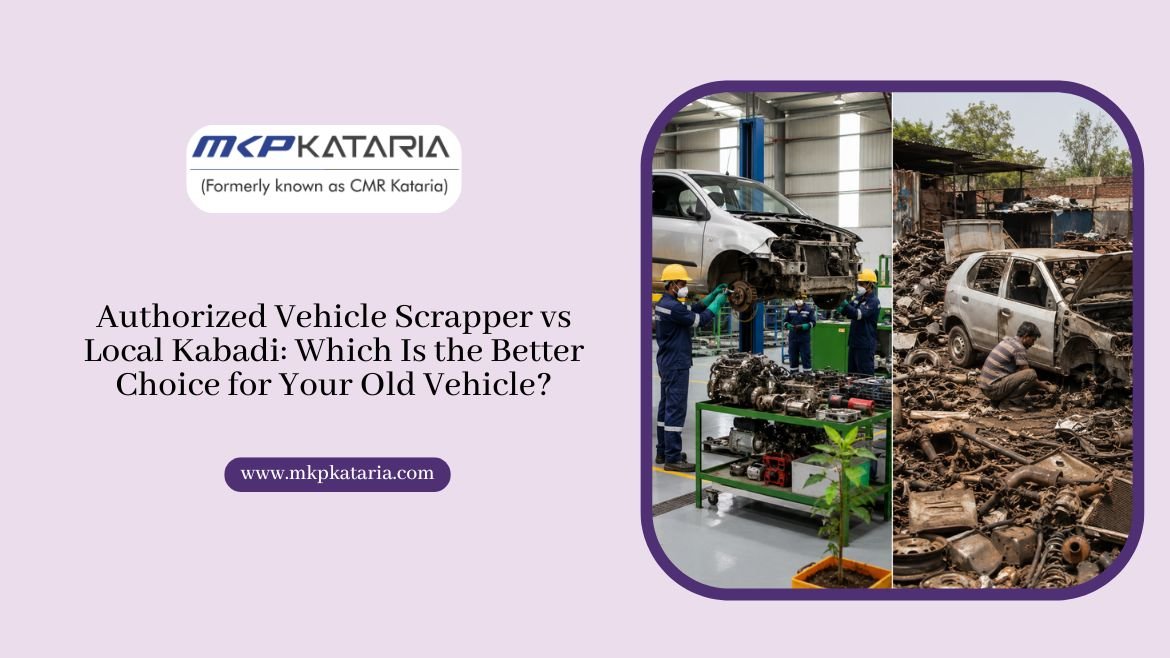
When a vehicle reaches the end of its life, many owners wonder what to do next. Some prefer selling it to a local kabadi (scrap dealer) for quick cash, while others choose an authorized vehicle scrapping centre that follows government-approved procedures.
Although both options involve disposing of an old vehicle, the process, legality, safety, and benefits are significantly different. Making the right choice not only protects your interests but also contributes to environmental sustainability and road safety.
In this guide, we’ll compare an authorized vehicle scrapper with a local kabadi to help you understand why choosing a certified facility is the smarter decision.
What Is an Authorized Vehicle Scrapper?
An authorized vehicle scrapper is a government-approved recycling facility that dismantles End-of-Life Vehicles (ELVs) according to environmental and safety standards.
These facilities operate under the Vehicle Scrapping Policy and follow strict procedures for:
- Vehicle inspection
- Safe dismantling
- Hazardous waste disposal
- Metal recycling
- Digital record keeping
- Issuing a Certificate of Deposit (CoD)
Every step is designed to ensure transparency, legal compliance, and eco-friendly recycling.
Who Is a Local Kabadi?
A local kabadi is an informal scrap dealer who purchases old vehicles primarily for selling usable parts and scrap metal.
While many kabadis have been operating for years, most do not have government authorization for vehicle dismantling.
The dismantling process often lacks:
- Proper environmental controls
- Pollution management
- Legal documentation
- Secure disposal of hazardous materials
As a result, vehicle owners may face risks even after selling their old vehicle.
Key Differences Between Authorized Vehicle Scrappers and Local Kabadis
|
Feature |
Authorized Vehicle Scrapper |
Local Kabadi |
|
Government Approval |
Yes |
Usually No |
|
Legal Documentation |
Complete |
Limited or None |
|
Certificate of Deposit |
Provided |
Not Available |
|
RC Cancellation Support |
Yes |
Rarely |
|
Environment-Friendly Recycling |
Yes |
Usually No |
|
Safe Fluid Disposal |
Yes |
Often Improper |
|
Vehicle Tracking |
Transparent |
Limited |
|
Compliance with Rules |
Full Compliance |
Uncertain |
Legal Protection for Vehicle Owners
One of the biggest advantages of using an authorized scrapping centre is legal protection.
Once your vehicle is officially scrapped, the facility helps ensure that:
- Registration records are updated.
- The vehicle is removed from official databases.
- A Certificate of Deposit is issued.
- Ownership records are properly closed.
This reduces the risk of your old vehicle being misused in illegal activities.
In contrast, selling to a local kabadi without proper documentation may leave your vehicle records active, potentially creating legal complications in the future.
Environmental Responsibility
Old vehicles contain several hazardous materials, including:
- Engine oil
- Brake fluid
- Coolant
- Battery acid
- Fuel residue
- Refrigerants
If these materials are not disposed of correctly, they can contaminate soil and groundwater.
Authorized scrapping facilities follow scientific methods to safely remove and recycle these substances before dismantling the vehicle.
Local scrap dealers may not have the necessary infrastructure for environmentally responsible disposal.
Safe Recycling Process
Modern vehicle recycling is much more than simply cutting metal.
Authorized facilities carefully dismantle vehicles by separating:
- Steel
- Aluminium
- Copper
- Plastic
- Rubber
- Glass
- Electronic components
Many of these materials are recycled and reused in manufacturing, reducing the need for new raw materials and supporting India’s circular economy.
Better Transparency
When dealing with an authorized vehicle scrapper, the entire process is documented.
You receive:
- Vehicle inspection records
- Required documentation
- Scrapping confirmation
- Certificate of Deposit
- Digital transaction records
This level of transparency provides peace of mind that your vehicle has been permanently removed from circulation.
Government Benefits
India’s Vehicle Scrappage Policy encourages owners to scrap old vehicles through certified facilities.
Depending on state policies and manufacturer programs, owners may receive benefits such as:
- Discount on purchasing a new vehicle
- Concessions on registration fees
- Road tax benefits
- Manufacturer incentives
These benefits are generally available only when the vehicle is scrapped through an approved facility.
Why Documentation Matters
Many vehicle owners overlook the importance of documentation during scrapping.
Proper paperwork helps prove that:
- Ownership has ended.
- The vehicle has been permanently dismantled.
- Government records are updated.
- Future liabilities are minimized.
Without proper documentation, there is always a possibility that the vehicle or its registration details could be misused.
Financial Considerations
Some owners believe local kabadis always offer a higher price.
While this may occasionally seem true, the comparison should go beyond immediate cash value.
An authorized scrapper provides additional value through:
- Legal compliance
- Documentation
- Government incentives
- Safe recycling
- Reduced future risk
Considering these long-term benefits, the overall value is often much greater than a slightly higher upfront payment.
Contribution to Road Safety
Old vehicles with poor emission performance and worn-out components contribute to:
- Road accidents
- Higher pollution
- Mechanical failures
Removing unsafe vehicles from Indian roads improves public safety while encouraging the adoption of newer, cleaner, and more fuel-efficient vehicles.
Supporting Sustainable Development
Vehicle recycling conserves natural resources by recovering valuable metals and materials.
This reduces:
- Mining activities
- Industrial waste
- Energy consumption
- Carbon emissions
Every responsibly recycled vehicle supports India’s sustainability goals and promotes a cleaner environment for future generations.
When Should You Scrap Your Vehicle?
You should consider vehicle scrapping if:
- Repair costs exceed the vehicle’s value.
- The vehicle frequently breaks down.
- It no longer meets emission norms.
- It has suffered major accidental damage.
- Registration renewal becomes difficult.
- Insurance costs continue to increase.
Instead of investing repeatedly in an ageing vehicle, responsible recycling is often the better long-term decision.
How to Choose the Right Vehicle Scrapping Centre
Before handing over your vehicle, check whether the facility:
- Has government authorization.
- Provides complete documentation.
- Offers transparent valuation.
- Issues a Certificate of Deposit.
- Assists with RC cancellation.
- Follows eco-friendly dismantling practices.
Choosing an authorised vehicle scrapping facility ensures your vehicle is recycled responsibly while protecting you from legal, financial, and environmental risks.
Final Thoughts
Selling an old vehicle is more than a financial transaction—it is also a legal and environmental responsibility. While local kabadis may offer a quick solution, they often lack the documentation, compliance, and recycling standards required for safe vehicle disposal.
An authorized vehicle scrapper provides a transparent, secure, and environmentally responsible process that benefits both the vehicle owner and society. From proper documentation and safe dismantling to government-approved recycling practices, choosing a certified facility offers peace of mind and supports a cleaner, more sustainable future.
If you’re planning to retire your old vehicle, selecting a trusted government-approved scrapping centre is the safest and most responsible choice.