

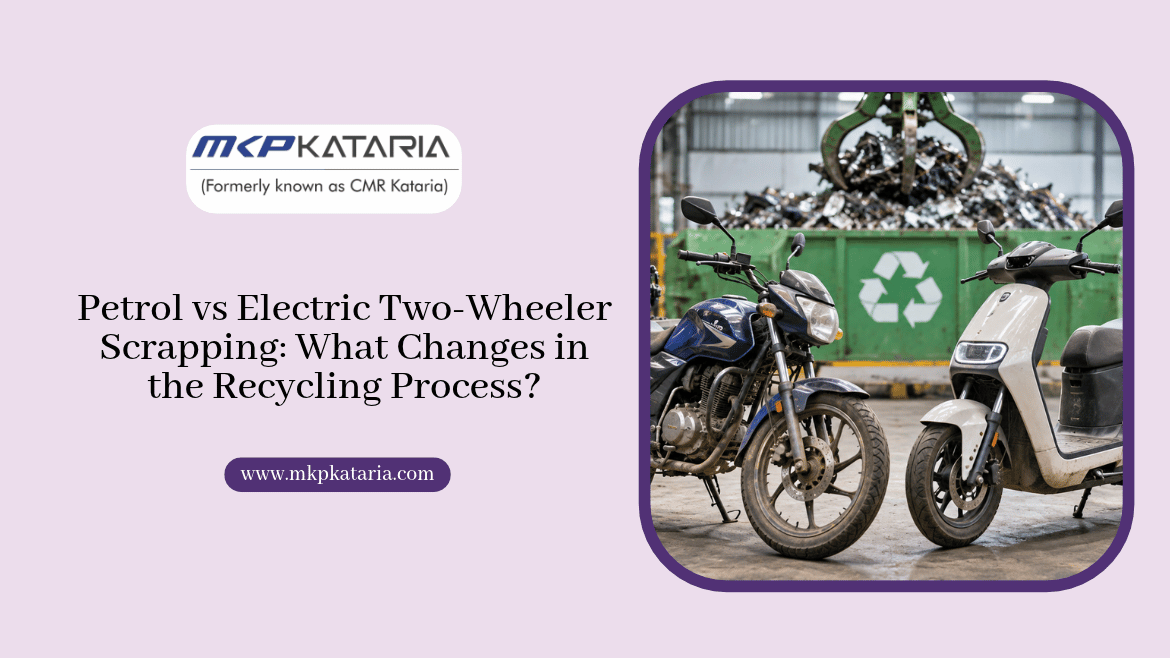
With an increasing number of electric scooters and bicycles entering the two-wheeler industry in India, methods to recycle automobiles are also evolving. Though there isn’t much different about the probable appearance of both petrol and electric scooters, their reason for being scrapped is entirely distinct, focusing on some of those aspects of each.
When one scraps a petrol two-wheeler, one mostly needs to handle issues regarding the engine, fuel system, oils, metal parts, tyres, plastics and some additional components. However, when scrapping an electric two-wheeler, one needs to pay attention to its high-voltage battery, battery electronics, wiring and electric drive.
India’s Environment Protection (End‑of‑Life Vehicles) Rules 2025 apply to all vehicles, from battery‑operated ones. However, waste batteries are covered separately by the Battery Waste Management Rules 2022. Items such as waste tyres, used oil and e‑waste follow their waste‑management rules.
So what actually changes when a petrol scooter is replaced with a scooter at the end of its life?
Petrol vs Electric Two-Wheeler Scrapping: Quick Comparison
|
Component |
Petrol Two-Wheeler |
Electric Two-Wheeler |
|
Main power source |
Petrol engine |
Battery and electric motor |
|
Engine |
Yes |
No conventional engine |
|
Fuel system |
Petrol tank, fuel lines and related components |
Not applicable |
|
Engine oil |
Usually present |
No engine oil |
|
Traction battery |
Usually no |
Major component |
|
Electric motor |
Auxiliary electrical components may exist |
Main drive component |
|
Battery handling |
Conventional vehicle battery |
Traction battery requires specific handling |
|
Recycling focus |
Metals, engine, fluids, plastics, tyres |
Battery, metals, electronics, plastics and motor |
|
Main additional concern |
Fuel and used oil |
Battery safety and recycling |
How Is a Petrol Two-Wheeler Scrapped?
A petrol motorcycle or scooter has an internal‑combustion engine and several fluid‑containing systems. Before the petrol motorcycle or scooter is taken apart, it can be. Ready for the scrapping process.
Before dismantling, the parts and materials, from the petrol motorcycle or scooter, are then separated so that they can be handled correctly and recycled.
Common materials and components include:
- Steel and other metals
- Engine and transmission components
- Fuel tank
- Exhaust system
- Wheels
- Tyres
- Plastic body panels
- Electrical components
- Conventional battery
- Engine oil and other fluids
- Fuel and Fluids Need Attention
The petrol vehicle can retain not only the fuel but also engine oil, brake fluids, coolant in separate systems, and other fluids.
These materials should not just be thrown away to the environment but would require appropriate end-of-life processing of the relevant waste streams.
2. Engine Components Are Dismantled
The engine and other mechanical parts are taken apart from the vehicle. Based on how they’re working, some pieces might be checked to see if they can be used again. Others are sent for material recovery.
3. Metals Are Recovered
A lot of a two-wheeler is made of metal. Steel and other metals that can be reused are sent to recycling systems once the two-wheeler is disassembled.
How Is an Electric Two-Wheeler Scrapped?
Electric scooters and motorcycles have conventional mechanical parts, but their battery system makes the recycling process different.
An electric two-wheeler may contain:
- Traction battery pack
- Battery management system
- Electric motor
- Controller
- Wiring and connectors
- Charger-related components
- Electronic components
- Frame
- Wheels and tyres
- Plastic body panels
The most important difference is the traction battery.
Why Is the EV Battery So Important?
The battery does play an important role when the electric two-wheeler has finished its life cycle.
Lithium‑ion batteries can store electric energy. Batteries which are damaged, mishandled, short-circuited or suffer from physical damage can pose threats to safety.
That means that a motorbike should not just be viewed as a petrol bike with the engine taken out.
The Battery Waste Management Rule in India places responsibilities for collection, refurbishment and recycling of batteries with companies dealing with batteries themselves, in addition to mandating compliance with Extended Producer Responsibility.
What Happens to an EV Battery During Scrapping?
The steps differ based on the type of battery, its condition, the scrapping site and the rules that are in place.
A typical controlled process may involve:
Battery Identification
The battery pack is identified and assessed before further handling.
Condition Assessment
The battery is often inspected for signs of damage, like leaks, swelling, overheating or other problems.
Safe Removal
The battery is removed using procedures appropriate for the vehicle and battery system.
Further Processing
Depending on how the batteries are in condition and what rules apply, it might be considered for refurbishment or sent to a proper recycling process.
Battery waste has its rules that are different from the general vehicle-scrapping rules. The 2025 End-of-Life Vehicles Rules say that waste batteries that are, under the Battery Waste Management Rules, 2022, are not included.
Petrol vs Electric: Which Has More Parts to Recycle?
The answer depends on what is being counted.
A petrol two‑wheeler has conventional mechanical components, including an engine, fuel system and exhaust system.
An electric two‑wheeler has engine‑related components but introduces a larger electrical system and traction battery.
Therefore, the recycling process is not simply about the number of parts. The type of material and the way each component must be handled are more important.
What Happens to the Electric Motor?
The electric motor is another major component of an electric two-wheeler.
It can contain materials such as:
- Copper
- Steel
- Aluminium
- Permanent magnets in applicable motor designs
- Other electrical and mechanical components
After appropriate dismantling, recoverable materials can enter suitable recycling or processing streams.
What Happens to Petrol Vehicle Engines?
The various parts of petrol engines include metal components made from steel and aluminium.
The state of components and processes of the facility determine if components will be reused or recycled.
The processing stage for a car at the end of its useful life should be based on a system instead of neglecting documentation and fluids and selling parts separately.
Are Electric Two-Wheelers Harder to Scrap?
Electric two-wheelers require different handling than simply being more difficult.
The main extra thing to think about is the traction battery. Removing the battery, moving it, storing it, fixing it again and recycling it all need steps.
The Battery Waste Management Rules give a plan for collecting, storing, moving, fixing again and recycling batteries that are no longer useful.
That is why owners should let the facility know ahead of time if they are going to send a scooter or motorcycle.
What Should Owners Do Before Scrapping an Electric Scooter?
Before handing over an electric two-wheeler:
- Make sure to inform the facility that it’s an electric car.
- Provide details about the electric automobile.
- Ask if the place will allow your vehicle.
- Enquire about what will happen to the traction battery.
- Do not attempt to take or open the battery.
- Make sure to assemble the necessary ownership documents for the vehicle.
- Take out all the belongings from the car.
- Ask if there are any documents issued upon scrapping.
If the battery is damaged, swollen, leaking damaged in an accident, etc. inform the facility before transporting it.
What About the Regular Vehicle Battery?
In the case of petrol and electric two-wheelers, both of these types of vehicles often are equipped with electrical batteries which may have different functional principles.
A petrol scooter or motorcycle may typically be equipped with a conventional starter battery.
Depending on the design of the vehicle, an electric scooter can be sourced with an additional auxiliary battery that operates on low voltage along with the main traction battery.
Such low-voltage batteries should not be categorised or treated as similar to the regular type of battery waste.
Can the Same Scrapping Facility Handle Both Types?
It depends on the facility and its capabilities.
Vehicle owners should confirm whether the facility accepts:
- Petrol motorcycles
- Petrol scooters
- Electric scooters
- Electric motorcycles
- Vehicles with damaged batteries
- Non-running vehicles
If you are looking for two-wheeler scrap dealers in Ahmedabad, make sure they accept two-wheelers. Also check how they handle the battery before you book a collection. It is important to know if they recycle the battery properly or if they follow disposal methods. This helps you make a choice.
Why Proper Recycling Matters
A two-wheeler has many useful recyclable materials but may also have parts that need proper handling.
Proper recycling can help recover materials such as:
- Steel
- Aluminium
- Copper
- Plastics
- Glass
- Battery materials
- Other recyclable components
The 2025 End‑of‑Life Vehicles Rules cover vehicles, including battery‑operated vehicles, and set requirements for all people and companies that handle and process end‑of‑life vehicles.
At the same time certain types of waste, like batteries, tyres, old oil and electronic waste, are still covered by their own separate sets of rules and regulations.
Frequently Asked Questions
Does the scrapping of electric scooters differ from a petrol scooter?
Yes. Though the two kinds of vehicles are entitled to end-of-life handling, scrapping of electric scooters has to be undertaken with the particular focus on battery operating the vehicle and its electric components.
Can a scooter battery be recycled?
Yes, scooter batteries can be recycled. The disposal of batteries, in India, is governed by the Battery Waste Management Regulations of the Ministry of Environment and Forests. The rules are meant to inform battery collection, reuse and recycling.
Should I remove the EV battery before scrapping my scooter?
No. It is not safe or recommended for vehicle owners to remove the EV battery themselves. The battery is a high-voltage component. Must be handled with care. Always contact the facility to learn about their approved process for handling and collecting the battery.
Do petrol two-wheelers have battery waste?
Yes. Petrol two-wheelers also have battery waste. These vehicles usually come with a lead-acid battery. This type of battery is hazardous. Must be managed through proper waste-management channels to prevent environmental harm.
Can a damaged electric scooter be scrapped?
This may be possible depending on the state of the vehicle and the facility. Always inform about any damages done to the battery and any incident involving it before making transportation arrangements.
Final Takeaway
The biggest difference between petrol and electric two‑wheeler scrapping is the powertrain and battery system.
Petrol cars need care for engines, fuel systems, oils and parts that move. Electric bikes do not have an engine or fuel system. Have a battery that powers them and other electrical parts that need special attention.
For owners the safest approach is to identify the vehicle type, tell the facility about its condition, confirm that the facility will accept it and ask how the relevant parts will be processed. Electric vehicle batteries deserve attention because they are covered by India’s separate battery‑waste rules.
As India’s electric two‑wheeler market keeps growing, responsible end‑of‑life processing will become a more important part of owning and recycling a vehicle.