
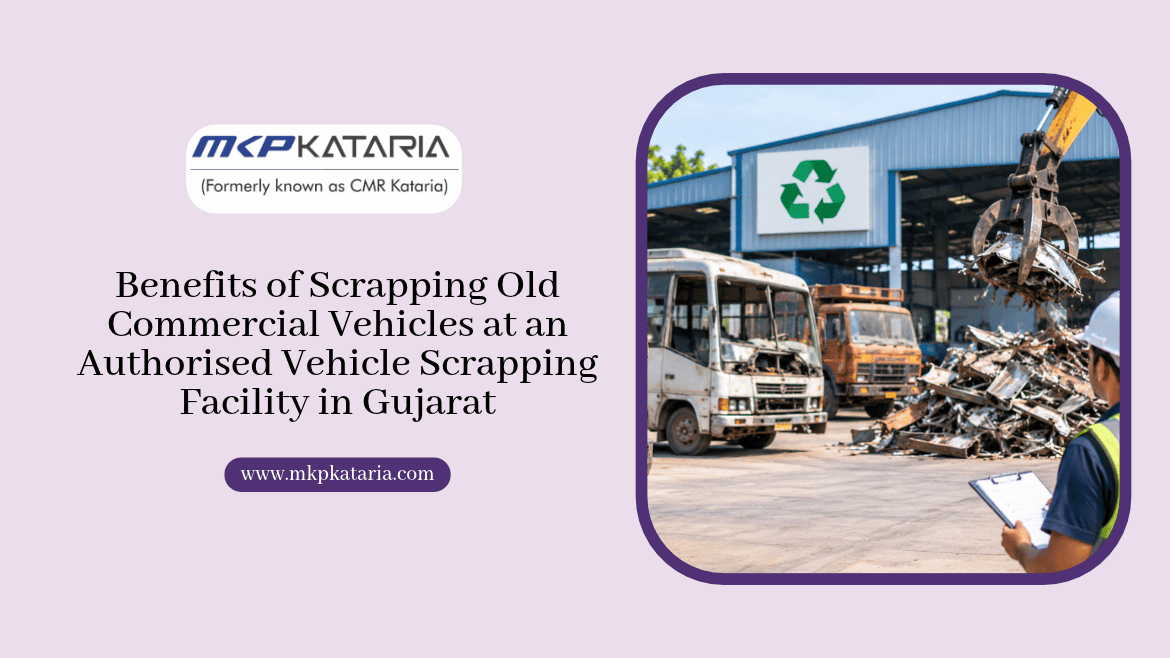
Commercial vehicles play an important role in India’s transportation, logistics, construction and manufacturing industries. Trucks, buses, delivery vans and other commercial vehicles help businesses move goods and provide essential services.
However, as vehicles become older, their maintenance requirements, fuel consumption and repair costs may increase. Older vehicles may also fail to meet applicable fitness and emission requirements.
When a commercial vehicle reaches the end of its useful life, scrapping it through a properly authorised facility can be a responsible decision.
In this blog, we will explore the benefits of scrapping old commercial vehicles, the general scrapping process and why businesses should choose a professional facility.
1. Reduce Maintenance and Repair Expenses
One of the biggest challenges of operating an old commercial vehicle is increasing maintenance costs.
Over time, important components such as engines, gearboxes, brakes, suspension systems and electrical equipment may require frequent repairs.
For transport businesses, repeated breakdowns can result in additional expenses, including:
- Spare parts replacement.
- Regular servicing and repairs.
- Emergency roadside assistance.
- Vehicle downtime.
- Increased maintenance labour costs.
When repair expenses become higher than the vehicle’s operational value, continuing to operate it may not be financially practical.
Scrapping an unfit vehicle allows businesses to avoid spending more money on an asset that is no longer suitable for regular operations.
2. Improve Fleet Efficiency
Businesses that depend on transportation need reliable vehicles to maintain their daily operations.
An ageing commercial vehicle may experience frequent breakdowns, delayed deliveries and reduced operating efficiency.
These problems can affect customer satisfaction and business productivity.
By replacing vehicles that have reached the end of their useful life, businesses can improve fleet reliability and reduce unexpected interruptions.
A planned vehicle replacement strategy also helps fleet owners manage maintenance budgets more effectively.
3. Support Better Environmental Management
Old commercial vehicles may produce higher emissions when their engines and emission-control systems are poorly maintained or no longer meet applicable standards.
Improperly dismantling or abandoning such vehicles can also create environmental problems.
Commercial vehicles contain several materials that require careful handling, including:
- Engine oil and transmission fluids.
- Coolants and lubricants.
- Lead-acid batteries.
- Tyres and rubber components.
- Plastic and electrical components.
- Steel and aluminium parts.
An authorised facility follows prescribed depollution and dismantling procedures to manage these materials.
Recoverable metals can be separated and sent for recycling, while hazardous components require appropriate treatment and disposal.
This supports resource recovery and reduces the environmental impact of unregulated vehicle dismantling.
4. Follow Applicable Vehicle Scrapping Regulations
India introduced the Motor Vehicles (Registration and Functions of Vehicle Scrapping Facility) Rules, 2021 to establish a regulated framework for vehicle scrapping.
Commercial vehicle owners should understand the applicable registration, fitness and vehicle scrapping requirements.
For example, commercial vehicles that do not meet the required fitness standards may become unsuitable for continued operation.
The applicable rules also cover vehicles that have been damaged in accidents, declared beyond economical repair or voluntarily offered for scrapping.
Before handing over a vehicle, businesses should check its registration status, ownership details, fitness records and any legal restrictions.
Choosing a registered vehicle scrapping facility helps businesses complete the scrapping process through an established regulatory framework.
5. Receive Proper Vehicle Scrapping Documentation
Documentation is particularly important for businesses that own multiple commercial vehicles.
When a vehicle is submitted to an authorised facility, the prescribed process includes ownership verification and the issuance of relevant certificates.
Two important documents are:
Certificate of Deposit (CD): This certificate acknowledges the submission of the vehicle to the scrapping facility for further treatment.
Certificate of Vehicle Scrapping (CVS): This certificate confirms that the vehicle has undergone the required scrapping process.
These documents help maintain records of the vehicle’s disposal and support the updating of relevant registration records.
Fleet owners should retain copies of the certificates, payment receipts and other related documents for their business records.
6. Recover Value from Old Commercial Vehicles
Even when a commercial vehicle is no longer suitable for road use, it may still contain valuable recyclable materials.
The scrap value depends on several factors, including:
- Total vehicle weight.
- Quantity of recoverable steel.
- Aluminium and copper components.
- Condition of the engine and other parts.
- Reusable components, where permitted.
- Current market demand for recyclable materials.
For example, trucks and buses contain substantial quantities of steel, while electrical systems may contain copper wiring.
The facility generally evaluates the vehicle’s condition and recoverable materials before determining the offer.
Businesses should request a clear valuation and payment record before handing over their vehicles.
7. Manage Multiple Vehicles More Effectively
Transport companies, logistics operators, construction businesses and manufacturing organisations may own several commercial vehicles.
Managing old and unused vehicles across multiple locations can become difficult.
A planned scrapping arrangement can help businesses:
- Identify vehicles that are no longer economical to operate.
- Organise vehicle inspections.
- Maintain ownership and disposal records.
- Schedule vehicle collection.
- Reduce the space occupied by unused vehicles.
- Improve fleet management.
Businesses with multiple vehicles should discuss collection arrangements and documentation requirements with the facility in advance.
8. Understand the Vehicle Scrapping Process in Gujarat
The general process of commercial vehicle scrapping includes the following stages.
Step 1: Vehicle assessment
The vehicle’s condition, registration details and ownership records are reviewed.
Step 2: Document verification
The owner submits the required registration and identity documents along with applicable authorisations.
Step 3: Valuation
The facility evaluates the vehicle based on its weight, condition and recoverable materials.
Step 4: Vehicle submission
The vehicle is handed over through the prescribed process, and the necessary acknowledgement and certificates are generated.
Step 5: Depollution and dismantling
Hazardous fluids and components are removed and managed appropriately. The vehicle is dismantled, and recyclable materials are segregated.
Step 6: Final documentation
After the required treatment, the final scrapping certificate is issued through the applicable system.
The exact procedure may vary depending on the vehicle category, ownership situation and applicable regulations.
9. Who Should Consider Commercial Vehicle Scrapping?
Commercial vehicle scrapping can be relevant for several types of organisations.
- Transport companies: Businesses operating old trucks and goods carriers.
- Logistics companies: Organisations managing delivery vans and commercial fleets.
- Construction companies: Businesses using old tipper trucks, dumpers and other vehicles.
- Manufacturing units: Companies maintaining vehicles for internal transportation.
- Bus operators: Businesses managing older passenger transport vehicles.
- Fleet owners: Organisations replacing multiple ageing vehicles.
These businesses can benefit from maintaining a structured vehicle replacement and disposal plan.
Conclusion
Scrapping old commercial vehicles is not just about disposing of unwanted assets. It is also an opportunity to reduce maintenance expenses, improve fleet efficiency, recover recyclable materials and follow applicable vehicle disposal regulations.
Businesses in Gujarat should consider working with an authorised facility that can manage vehicle verification, documentation, depollution and dismantling through the prescribed process.
MKP Kataria can help vehicle owners and businesses understand commercial vehicle scrapping requirements and available disposal options. Contact the team to discuss your vehicle scrapping needs.