

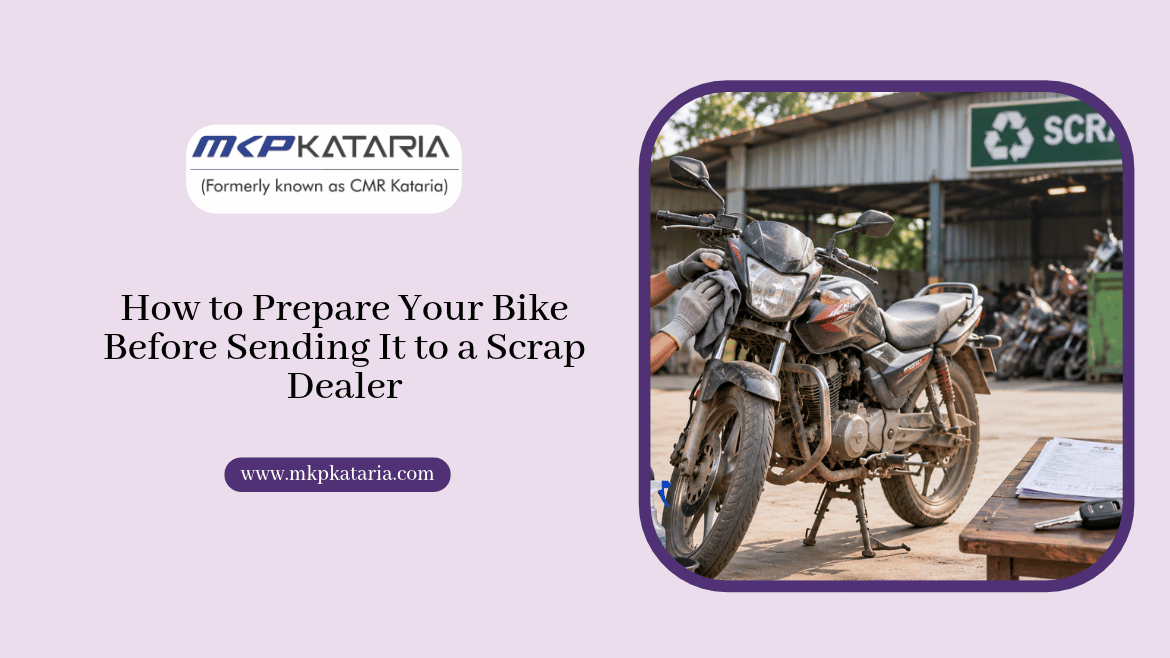
If the useful life of your bike has come to an end, taking it to a scrap dealer is a convenient method of disposing of your vehicle. However, some preparations on your part will facilitate the task of disposing of your bike in an organised manner.
From discarding personal items to collecting essential documents, here are a few things that one should take care of before discarding their bike. In case you plan to sell your old bike at the two wheeler kabadi market Ahmedabad, then the below checklist will help you to prepare.
1. Confirm That You Want to Scrap the Bike
Start by asking yourself whether scrapping is really the right call.
It usually makes sense when:
- Accident damage is serious
- The bike is very old
- Repair costs exceed its value
- It has sat unused for years
If the bike still runs well, compare the scrap value with the second-hand price first. You might be undervaluing it.
2. Collect Your Vehicle Documents
Have your papers prepared before you contact a scrap dealer or authorised scrapping facility. Based on your situation, you may require:
- Registration Certificate (RC)
- ID proof of the owner
- Insurance documents
- PUC certificate
- Loan documents/hypothecation documents
In an authorised scrapping, verification of the vehicle as well as the owner takes place before anything else.
3. Remove Your Personal Belongings
Check every storage area properly. It’s surprisingly easy to forget things when the bike is picked up quickly. Look for:
- Documents
- Phone chargers and USB cables
- Raincoats
- Tools
- Parking cards
- Anything under the seat
4. Remove Accessories You Want to Keep
If you added accessories you’d like to use on your next bike, take them off now. Once the bike is gone, so are they. Common ones include:
- Mobile holders
- Aftermarket mirrors
- Saddlebags
- Custom lights
- GPS devices
- Name plates
One caution: leave the vehicle identification parts alone, and don’t remove anything needed for official verification, unless the facility tells you to.
5. Take Photos of the Bike
Grab your phone and click a few clear pictures before handover. Cover the:
- Front and rear
- Both sides
- Registration number
- Chassis area
- Engine area
- Any existing damage
These photos act as a record of condition. They help most when a family member or friend is handing over the bike on your behalf.
6. Check the Fuel and Other Fluids
A petrol bike can hold fuel, engine oil, brake fluid, and coolant.
Please don’t try to drain or open up the fuel system yourself unless you have the right tools and know-how. It’s risky.
Authorised facilities follow proper depollution steps for safe fluid handling.
What you can do is tell the dealer if the bike has fuel left or is leaking. That’s enough.
7. Do Not Try to Dismantle the Bike Yourself
Removing the engine, battery or wheels prior to sale might seem to be an intelligent means of earning additional money, but do-it-yourself dismantling could be both difficult and problematic.
It could be:
- A safety hazard
- A documentation problem
- Destruction of reusable parts
Let the authorized disposal facility or expert perform the job.
8. Pay Special Attention to Electric Bikes
Scrapping an electric two-wheeler is a little different. The key component is the traction battery, and it needs careful handling.
Never:
- Open the battery pack
- Break the casing
- Cut the cables
- Remove battery cells
- Toss it into general scrap
In India, waste batteries fall under separate battery-waste management rules. The End-of-Life Vehicles framework also covers electric vehicles, while batteries follow their own framework. So tell the facility upfront that your bike is electric. That way, the battery goes through the right process.
9. Cancel or Complete the Required Vehicle Formalities
The job isn’t done just because the bike has left your house. For an authorised scrapping process, make sure the required vehicle records and registration formalities are completed.
India’s national vehicle-scrapping system offers services for both vehicle owners and registered scrapping facilities. Whatever certificates or papers you receive, keep copies. You may need them later.
10. Get the Final Transaction Details in Writing
Do not solely depend on an oral agreement. Verify the following before any handover:
- Scrap price mutually agreed
- Cost of pickup
- Mode of payment
- Collection particulars
- Documents for scrapping/de-registration
- Any tax/deduction
A written document is helpful for solving problems in the future.
11. Remove Your Vehicle From Digital Accounts
In case your bike is connected to any app or internet service, remove it. Find:
- GPS account
- Account of the bicycle manufacturer
- Vehicle connected account
- Parking account
- Insurance app
And delete all personal data stored.
12. Inform the Scrap Dealer About the Bike’s Condition
Be honest about the vehicle’s condition.
Tell the dealer if:
- The engine does not start
- The bike has been in an accident
- The battery is damaged
- There is a fuel leak
- The bike has missing parts
- The vehicle has been standing unused for a long time
- It is an electric vehicle
Providing accurate information helps the dealer arrange the right collection and handling process.
Quick Checklist Before Scrapping Your Bike
Check the following one last time before the bike leaves.
|
Check |
Done? |
|
Vehicle documents collected |
☐ |
|
Personal belongings removed |
☐ |
|
Accessories you want to keep removed |
☐ |
|
Bike photographed |
☐ |
|
Vehicle condition shared with dealer |
☐ |
|
Fuel/fluid condition informed |
☐ |
|
EV battery information shared, if applicable |
☐ |
|
Scrap price confirmed |
☐ |
|
Payment method confirmed |
☐ |
|
Scrapping/registration documents understood |
☐ |
Why Proper Preparation Matters
Disassembling your bike before scrapping it is not only going to give you better value for money. It will also help secure your personal property and documents.
It could definitely make the whole process much more straightforward for you regarding the condition of your bicycle, the ownership, and all documentation.
More importantly, however, don’t take any risks by attempting any dismantling yourself. It is vital to follow the correct procedure.
Frequently Asked Questions
Can I remove parts from my bike before scrapping it?
You can take off personal accessories that belong to you. Avoid removing identification components or dismantling major mechanical parts without guidance from the authorised facility.
Should I remove petrol before scrapping a bike?
No, don’t drain it yourself. Just inform the dealer about the fuel and let trained people handle depollution.
What should I do with an electric bike battery?
Leave it intact. Don’t open or damage it. Tell the facility the bike is electric so the battery follows the right waste-management process.
Do I need the RC when scrapping my bike?
Yes, in most cases. The RC and other documents play a major role in the verification process during the scrapping procedure, so keep them ready.
Should I take photos before handing over my bike?
Definitely. Photos of the bike, registration number, and existing condition give you a handy record before pickup.
Can I scrap a bike that does not start?
Usually, yes. A non-running bike can generally be handled as an end-of-life vehicle. Just mention its condition so the dealer can plan the pickup.
Conclusion
Preparing your bike takes very little time, yet it prevents plenty of problems later. Remove your belongings, sort out your documents, photograph the bike, be honest about its condition, and confirm the payment and scrapping process.
For electric bikes, take extra care with the traction battery and never try unsafe dismantling. Pick an authorised facility or an experienced scrap professional, and your bike will be handled safely and responsibly.