

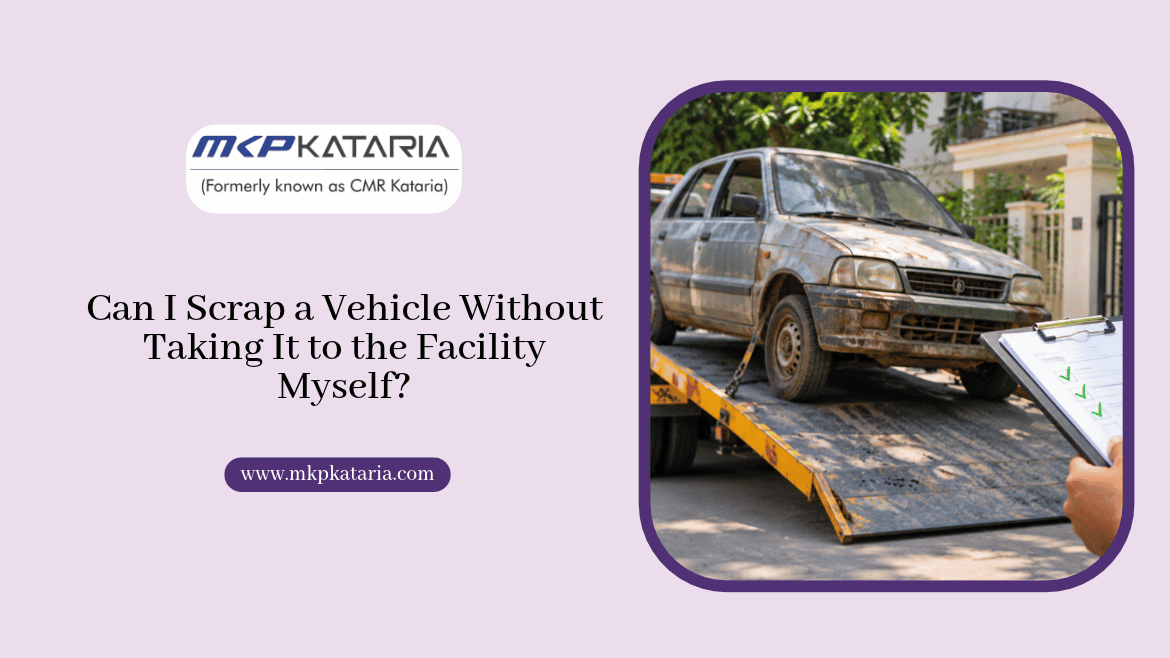
Yes, in cases you can arrange for your old car, bike, scooter or another eligible vehicle to be collected by you driving it yourself to a vehicle scrapping facility. However the exact way to pick up the vehicle depends on the facility, the condition of the vehicle, the place, the ownership documents you have and the rules that are in place.
This is especially useful when a vehicle is not safe to drive. It is also helpful when a vehicle has been left unused for a time. It applies when a vehicle has a problem. It is also needed when a vehicle cannot be driven safely to the facility.
India’s vehicle scrapping system includes Registered Vehicle Scrapping Facilities, which are connected with the government’s vehicle scrapping process and VAHAN services. The vehicle scrapping portal provides services for vehicle owners and RVSF operators.
Can a Scrapping Facility Pick Up My Vehicle?
You don’t have to be the one to deliver it. Government guidance on end-of-life vehicles says take-back can happen through collection centres and RVSFs, so pickup is a real option.
That said, not every facility offers it, and not every area is covered. So ask before you book:
- Do you pick up from my area?
- Are there towing charges?
- Any conditions I should know about?
This matters most for:
- Non-running cars
- Accident-damaged vehicles
- Old motorcycles
- Scooters unused for years
- Engine failure cases
- Vehicles far from the facility
How Does Vehicle Pickup for Scrapping Usually Work?
Every facility does things a little differently, but it usually goes like this.
- Contact the Scraping Facility
Call a registered scrapping facility and tell them about your vehicle. They’ll usually ask for:
- Registration number
- Vehicle type and model
- Pickup location
- Owner details
- Vehicle condition
- Photos
This lets them decide whether they can take it and how to collect it.
- Verify Vehicle Ownership
The facility will want proof that you’re the registered owner or that whoever is handing over the vehicle has your permission. This is a must, since scrapping is tied to official registration records.
If someone else is dropping it off for you, you’ll need an authorisation letter. The scrapping rules include a set format for exactly this.
- Confirm the Required Documents
The facility will tell you what to bring. Usually that’s the Registration Certificate (RC) plus ID or ownership papers.
Extra paperwork may be needed if there’s pending finance, hypothecation or a legal dispute. The official documents also include an owner undertaking covering dues, litigation and hypothecation.
- Arrange Vehicle Collection
Once your vehicle and papers are confirmed, the facility can schedule pickup if they offer it. Your vehicle is moved on a tow or recovery vehicle instead of being driven on the road, which is much safer if it’s in poor shape.
- Vehicle Is Received by the Facility
Once your vehicle arrives, the facility inspects it and completes the paperwork. RVSFs can update the VAHAN database and issue the Certificate of Deposit and Certificate of Scrapping.
What If My Vehicle Is Not Running?
A non-running vehicle is the top reason people ask for pickup. Maybe yours has:
- A failed engine
- Damaged transmission
- Dead battery
- Severe accident damage
- Major electrical failure
- Missing or damaged wheels
Please don’t try to drive an unsafe vehicle to the facility just to get it scrapped. It’s risky for you and everyone else on the road. Ask the facility to arrange proper transport instead.
Can I Scrap an Old Bike or Scooter Without Riding It to the Facility?
Yes, the same idea applies to two-wheelers. If your old motorcycle or scooter won’t start, ask the facility about pickup or transport.
Two-wheelers are part of the end-of-life vehicle framework. CPCB guidance even names small two- and three-wheelers as ELVs. Before you hand it over, double-check your documents and ownership details.
What Happens After the Vehicle Is Handed Over?
Scrapping is more than breaking a vehicle into pieces. An RVSF is expected to do proper de-pollution and dismantling with trained staff and the right equipment.
Depending on the vehicle, they’ll handle things like:
- Metal
- Plastic
- Glass
- Tyres
- Batteries
- Fluids
- Electrical parts
- Other recoverables
The aim is to deal with old vehicles in a controlled and eco-friendly way.
What Is a Certificate of Deposit?
The Certificate of Deposit (CD) is one of the key documents in India’s scrapping system. It’s your proof that the vehicle has been handed over for scrapping.
It can also matter if you want incentives or benefits on a new vehicle, where the current rules or schemes allow. Since these depend on government and state policies, check what applies at the time you scrap.
What Is a Certificate of Scrapping?
The Certificate of Scrapping confirms that your vehicle has gone through the proper scrapping process in the registered system.
Keep documents safe. You may need documents later for registration, insurance, tax or other paperwork. The exact set of documents you receive and the steps, for RTO or Vahan can vary depending on the vehicle and the rule.
What Should I Remove Before Vehicle Pickup?
Before the vehicle leaves, go through the cabin, boot and every storage spot. Take out:
- Documents and papers
- Bags
- Electronic devices
- Toll tags (FASTag)
- Personal accessories
- Tools
Also check whether any aftermarket accessories should come off. But don’t remove identification parts or anything the facility needs for scrapping without asking them first.
What If the Vehicle Has a Loan or Hypothecation?
This one trips people up. If your vehicle is financed or still has an active hypothecation entry, don’t assume it can be scrapped right away. You’ll need to sort out the loan or paperwork first.
The scrapping forms ask you to declare pending dues and confirm whether any hire-purchase, lease or hypothecation has been cleared. Talk to your lender and the scrapping facility to find out what needs to be done before they’ll accept the vehicle.
How to Choose the Right Scrapping Facility
First, make sure the facility is registered and part of the government’s scrapping framework. Then ask:
- Do you offer pickup?
- Do you cover my location?
- Which documents do I need?
- What’s the towing charge?
- Which certificate will I get?
- How will my vehicle be processed?
- How is the scrapping recorded?
- What if there’s pending finance?
An authorised facility makes sure your vehicle goes through the formal process and not some informal handover.
Can I Complete the Process Completely Online?
Partly. Some scrapping and VAHAN-related steps can be done online, and the official portal has services for owners and RVSF operators.
But the physical side can’t go online. Your vehicle still has to be collected, deposited, inspected and processed by the facility.
Frequently Asked Questions
Can I scrap my car without driving it to the facility?
In many cases, yes. Ask the facility if they offer pickup or collection for your area.
Can a non-running vehicle be scrapped?
Yes, it may be accepted, depending on the facility’s requirements and the rules. Towing may be needed.
Can someone else submit my vehicle for scrapping?
Yes, an authorised person can usually deposit it for the registered owner once the right authorisation and papers are in place.
Will I receive a document after scrapping my vehicle?
Yes. The registered process provides a Certificate of Deposit and a Certificate of Scrapping, subject to the process.
Can I scrap a motorcycle or scooter through the same process?
Yes, two-wheelers fall under the end-of-life vehicle framework. Confirm acceptance and pickup with the facility.
Final Takeaway
You usually don’t have to think that you need to drive a vehicle to a scrapping facility by yourself. If the vehicle is not working, not safe to drive or hard to move, ask a registered scrapping facility about its pickup or collection service.
Before giving the car to someone, make sure you are the owner, get all the papers ready, check if there is any money still owed on the car or any legal problems, take out anything personal that is in the car, and make sure you know how the car will be listed and what papers will be given.
The important thing is to use a place that is properly registered and keep every paper that comes from the process of getting rid of the car. This makes it easier to move the car into proper recycling and keeps everything clear and easy to track.