
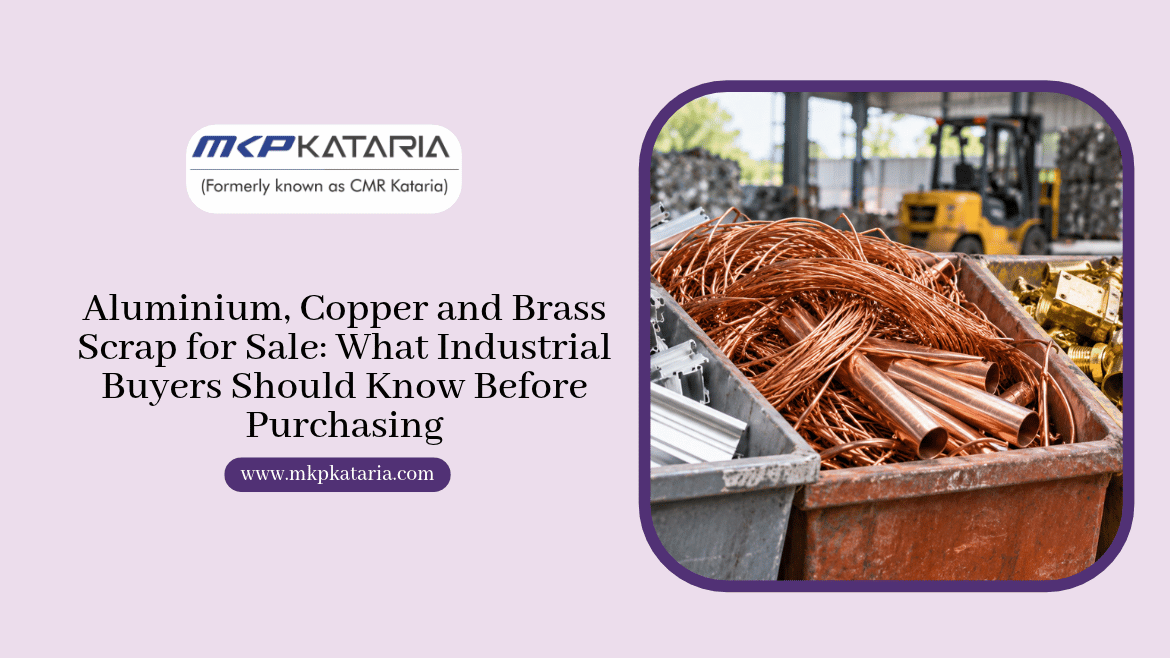
Metal scrap plays an important role in India’s manufacturing, construction, engineering and recycling industries. Many industrial businesses purchase recyclable metals as raw materials for producing new components, machinery, electrical products and other industrial goods.
Among the commonly traded non-ferrous metals, aluminium, copper and brass are widely used because of their useful physical and mechanical properties.
However, purchasing metal scrap requires proper planning. Buyers need to understand metal grades, material quality, contamination levels, weight verification and supplier reliability before placing an order.
This guide explains what industrial buyers should know before purchasing aluminium, copper and brass scrap in India.
1. Understand the Different Types of Metal Scrap
Before purchasing scrap, it is important to understand the differences between aluminium, copper and brass.
Each metal has different properties and industrial applications.
Aluminium Scrap
Aluminium is lightweight, corrosion-resistant and relatively easy to process.
It is commonly recovered from:
- Industrial machinery.
- Aluminium sheets and plates.
- Window and door frames.
- Electrical components.
- Automobile parts.
- Manufacturing offcuts.
- Aluminium profiles.
Aluminium scrap is used in foundries, metal processing units, automotive manufacturing and other industries.
However, buyers should check whether the material is pure aluminium or an alloy because different grades have different melting and processing requirements.
Copper Scrap
Copper is known for its high electrical and thermal conductivity.
It is commonly recovered from:
- Electrical cables.
- Motors and generators.
- Transformers.
- Industrial wiring.
- Copper pipes.
- Electrical equipment.
- Manufacturing processes.
Copper scrap is particularly useful for industries involved in electrical manufacturing and metal refining.
Buyers should check for insulation, coatings, oxidation and contamination before purchasing copper materials.
Brass Scrap
Brass is an alloy mainly made from copper and zinc.
It is commonly used in:
- Plumbing fittings.
- Industrial valves.
- Electrical connectors.
- Machine components.
- Fasteners.
- Decorative metal products.
- Engineering equipment.
The composition of brass can vary depending on its application. Therefore, buyers should verify the material grade and composition before purchasing it for industrial production.
2. Check the Quality and Grade of the Scrap
Metal quality is one of the most important factors affecting its suitability for industrial applications.
Not all scrap materials have the same composition or processing requirements.
For example, clean aluminium scrap may be easier to process than mixed aluminium containing plastic, rubber or other metals.
Similarly, copper wire with insulation requires additional processing compared with clean, separated copper.
Before purchasing, buyers should check:
- Metal composition.
- Material grade.
- Physical condition.
- Surface contamination.
- Presence of paint or coatings.
- Rust or oxidation.
- Moisture content.
- Mixing with other metals.
For high-volume industrial purchases, buyers can request material specifications or laboratory testing wherever necessary.
3. Understand the Importance of Scrap Segregation
Scrap segregation means separating different materials according to their metal type, grade and condition.
Proper segregation improves material handling and helps industrial buyers obtain scrap that is suitable for their manufacturing requirements.
For example:
- Aluminium should be separated from copper and steel.
- Brass components should be kept separate from mixed metal scrap.
- Insulated copper cables should be separated from bare copper.
- Painted and coated materials should be identified separately.
- Plastic and rubber contaminants should be removed wherever possible.
Buying properly segregated material can reduce sorting expenses and improve processing efficiency.
4. Evaluate the Supplier Before Purchasing
Supplier selection is just as important as material quality.
Industrial buyers should work with suppliers who can provide consistent material quality, accurate weights and clear commercial terms.
When evaluating a supplier, consider the following factors:
Business Verification: Check the supplier’s business details, address and operational background.
Material Availability: Confirm whether the supplier can provide the required metal type and quantity.
Quality Consistency: Ask whether the material is segregated according to grade and specification.
Weight Accuracy: Verify whether the supplier uses properly maintained weighing equipment.
Documentation: Request applicable invoices, delivery documents and material descriptions.
Supply Capacity: Check whether the supplier can support repeat orders and bulk requirements.
These checks can help businesses reduce purchasing risks and establish long-term supply relationships.
5. Understand What Affects Scrap Metal Prices
Metal scrap prices can change depending on market conditions and material quality.
Buyers should not assume that all aluminium, copper or brass scrap will have the same price.
Several factors influence the purchase cost.
Metal Type
Copper, brass and aluminium have different market values because of their properties, demand and industrial applications.
Material Grade
Higher-quality and properly segregated scrap may attract a better price than mixed or contaminated materials.
Quantity
Bulk purchases may have different commercial terms depending on the supplier and order size.
Market Demand
Demand from manufacturing, construction, electrical and automotive industries can influence metal prices.
Processing Requirements
Materials that require additional cleaning, sorting or separation may involve higher processing costs.
Buyers should compare quotations based on the same material grade, quality and delivery conditions.
6. Check Weight and Material Quantity Before Purchase
Accurate weight measurement is essential when buying metal scrap in bulk.
Even a small difference in weighing can result in a significant financial difference in large transactions.
Industrial buyers should consider these practices:
- Check the weighing scale before material loading.
- Verify gross and net weight.
- Understand the deduction for packaging or other materials.
- Confirm the moisture and contamination deductions, if applicable.
- Maintain weight records.
- Match the delivered quantity with the invoice.
For large orders, buyers may also arrange independent weight verification.
Clear weight records help prevent misunderstandings between buyers and suppliers.
7. Inspect the Material Before Finalising the Order
Whenever possible, inspect the scrap before making a purchase commitment.
Visual inspection can help identify obvious quality issues such as mixed metals, plastic contamination, excessive oxidation and unwanted attachments.
For specialised industrial applications, visual inspection alone may not be sufficient.
Buyers may need additional testing to verify:
- Chemical composition.
- Alloy grade.
- Metal purity.
- Mechanical properties.
- Contamination levels.
This is particularly important for foundries, engineering manufacturers and businesses using scrap as a direct production input.
8. Plan Storage and Transportation
Metal scrap must be stored and transported properly to maintain its condition and avoid unnecessary material loss.
Different metals may require different storage arrangements.
For example, copper and brass should be stored in secure areas to reduce the risk of theft. Aluminium scrap should be protected from unnecessary contamination.
Industrial buyers should also consider:
- Adequate storage space.
- Separate areas for different metals.
- Safe loading and unloading arrangements.
- Suitable transport vehicles.
- Material handling equipment.
- Proper stock records.
For bulk purchases, transportation costs should be included when calculating the total procurement cost.
9. Benefits of Purchasing Recyclable Metals
Purchasing recyclable metals can support industrial operations in several ways.
Resource Recovery: Recycled metals provide an additional source of raw material for manufacturing.
Material Availability: Scrap can support the production requirements of foundries and metal processing businesses.
Waste Reduction: Using recovered metals helps reduce the amount of material sent for disposal.
Industrial Recycling: Scrap purchasing supports a circular approach in which recovered materials are processed and used again.
However, the suitability of scrap depends on the manufacturing process, material specifications and quality requirements.
Conclusion
Aluminium, copper and brass scrap are valuable materials for India’s industrial and manufacturing sectors. However, purchasing them requires careful attention to metal grades, purity, contamination, supplier reliability, weight accuracy and transportation.
Businesses looking for industrial scrap for sale should compare suppliers based on material specifications and commercial terms rather than price alone.
A reliable supply arrangement can help industrial buyers maintain consistent material quality and support efficient manufacturing operations.
MKP Kataria offers industrial scrap-related solutions for businesses looking to understand scrap material availability and purchasing requirements. Contact the team to discuss your industrial scrap requirements.